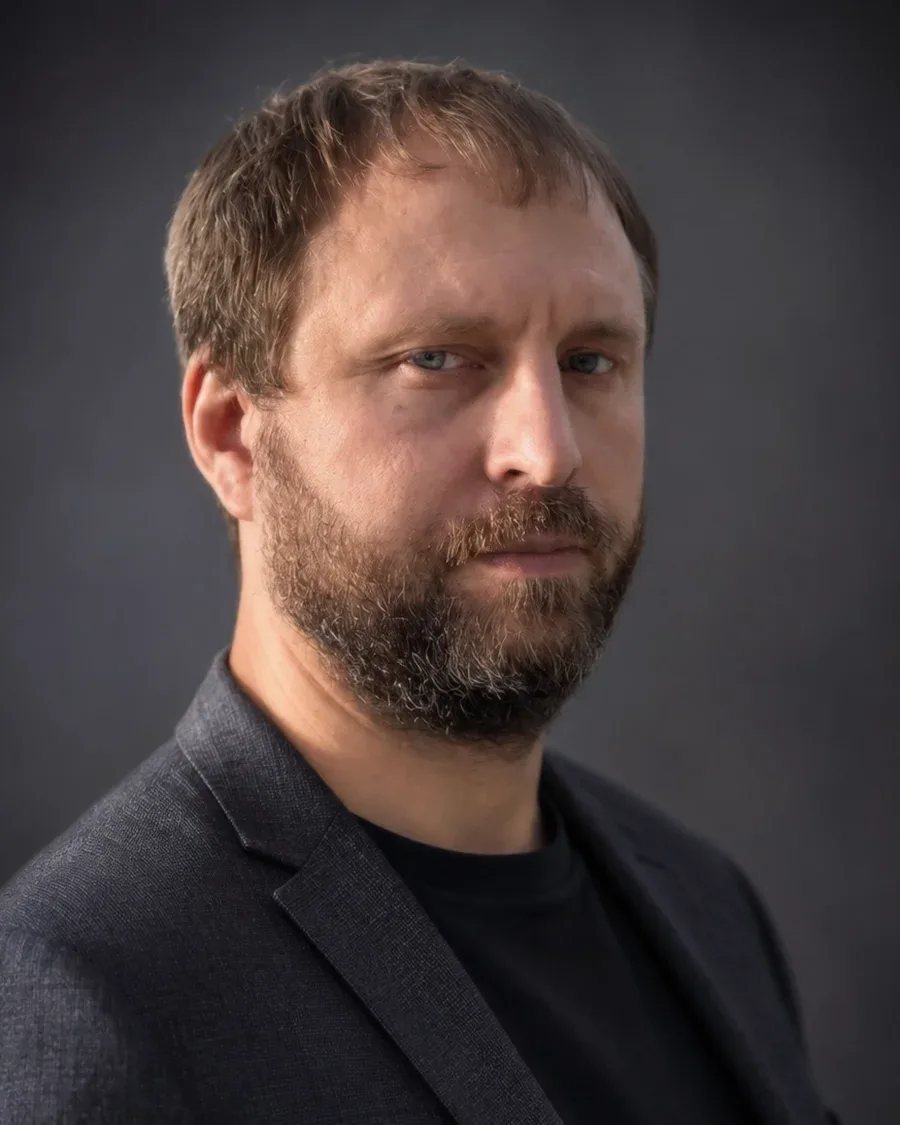
I started building websites in 2011 — MODX first, then WordPress, front-end production and everything around it. Web work has been my profession ever since.
Before the web took over completely, I trained as a mechanical engineer and spent five years in heavy-machinery purchasing and logistics. That world runs on specifications, suppliers and deadlines with real consequences — it is where my habit of owning the last mile comes from.
Since 2018 I have been the long-term technical partner of a US agency, Cre8MediaHub — responsible for web systems, infrastructure and AI across its client portfolio. In 2026 I registered my own Austrian EPU in Dornbirn and now combine client work with my own products.
The way I build has changed a lot since 2011. Today AI does most of the typing — design directions, front-end code, content structure, tooling — while I hold the vision, the context and the responsibility for what actually ships. A page builder, a custom theme or a hand-coded front end are just different tools for the same job: a site that works for its owner long after launch.
Alongside client work I run my own products — Solarstorm.today, a bilingual space-weather service on live NOAA data, and a set of analysis tools around nutrigenomics and DNA data. They are where I test ideas first, so what reaches clients has already been through production once.
I work remotely from Dornbirn, Austria, with clients mostly in the US and the DACH region, and I prefer written communication — a clear brief and a written decision trail beat a call almost every time.